


🥕🍊 From Scraps to Superfood (Quart Batch) How to Turn Apple Scraps (or Any Fruit) Into Live Vinegar — The Tickled Pickler Way

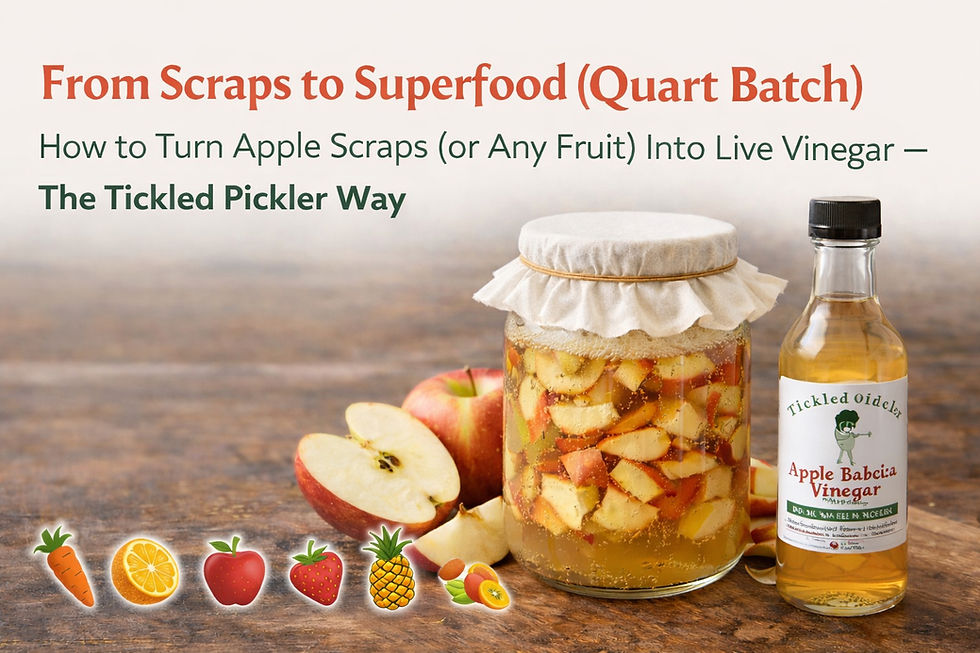
Citrus peels. Apple cores. Berry bottoms. Pineapple skins.
Most kitchens toss them.
We don’t. 😏
Because those scraps are loaded with natural sugars, wild microbes, and flavor compounds—everything needed to become real, living vinegar.
👉 And here’s where it gets powerful:
Every Tickled Pickler live vinegar can act as your “mother liquid” starter, jumpstarting your batch with active cultures and giving you a faster, more reliable fermentation.
🧠 The Quick Science (Why This Works)
Fermentation happens in two stages:
Yeast → Alcohol
Natural sugars in fruit convert into alcohol
Acetic Acid Bacteria → Vinegar
That alcohol converts into acetic acid (aka vinegar.)
Your scraps already contain the building blocks.
Adding live vinegar introduces an active microbial culture that keeps things moving in the right direction.
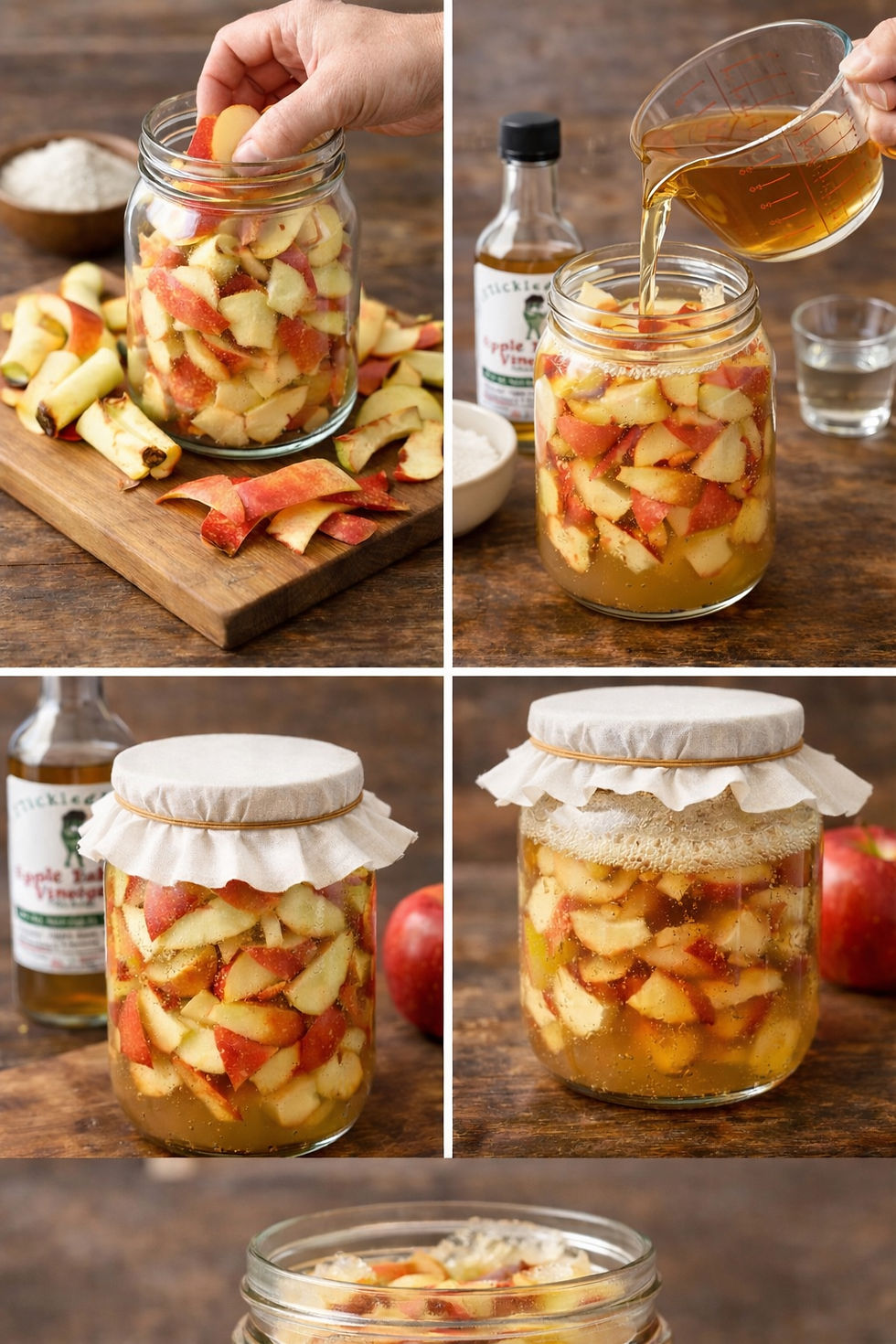
🫙 Quart-Size DIY Scrap Vinegar (Exact Recipe)
🧾 What You’ll Need (1 Quart Batch)
1 quart glass jar
Coffee filter + breathable cloth (layered)
Rubber band (secured tightly) → prevents fruit flies 🪰
2–3 cups fruit scraps (apple or mixed fruit)
1–2 tbsp sugar or honey (optional but recommended)
Filtered water
¼ cup Tickled Pickler live vinegar (starter)
Optional: 1–2 tbsp hard liquor (vodka or grain alcohol)
🍎 What Scraps Work Best?
High-sugar fruits (ideal base):
Apple peels & cores
Pineapple skins
Mango scraps
Berries (fresh or overripe)
Flavor boosters:
Citrus peels 🍊
Ginger ends
Herb stems (mint, basil, thyme)
Use lightly:
Onion or garlic scraps (can overpower)
🚫 Avoid anything moldy, oily, or heavily salted
❄️ Freeze Your Scraps = Flavor Control
Not enough scraps yet? Freeze them.
Why it works:
Breaks down cell walls → better extraction
Prevents spoilage
Lets you build intentional flavor blend
👉 Pro tip: Keep a “vinegar scrap bag” in your freezer at all times.
🥃 Optional Boost: Increase Fermentation Power
Add 1–2 tablespoons of hard liquor per quart.
Why:
Raises starting alcohol potential
Gives bacteria more to convert
Helps produce a stronger, more stable vinegar
Keep it small—this is support, not the main ingredient.
⚙️ Step-by-Step Process
1. Fill the Jar
Add scraps until the jar is ½–¾ full
Add sugar/honey if needed
2. Add Water
Cover scraps fully, leaving ~1 inch headspace
3. Add Starter
Add ¼ cup Tickled Pickler live vinegar
👉 This is your fermentation engine
4. Optional Boost
Add 1–2 tbsp liquor
5. Cover Properly (Critical)
Place coffee filter over jar opening
Add breathable cloth on top
Secure tightly with a rubber band
👉 This allows airflow while blocking fruit flies (don’t skip this step)
6. Store
Room temp (70–80°F)
Out of direct sunlight
⏳ Timeline
Days 1–7:
Light bubbling, fruity smell (yeast phase)
Weeks 2–4:
Alcohol develops, aroma deepens
Weeks 3–6:
Vinegar conversion begins
4–8 weeks:
Taste test → tangy, bright, acidic = ready
🧪 Signs It’s Working
✔ Clean sour smell
✔ Possible “mother” forming on top
✔ No fuzzy mold
🚫 If mold appears → discard
🧂 Pro Tips (Pickler Approved)
Keep scraps submerged
Stir occasionally early on
Warm temps = faster fermentation
Label your jars (future you will thank you)
Strong starter = better results
🌎 Why This Matters
This isn’t just a kitchen project.
It’s:
♻️ Waste reduction
🔥 Flavor creation
🧠 Real food science
🌿 A living, breathing kitchen system
🧃 Our Process, Elevated
At The Tickled Pickler, we take these same principles and scale them using:
Controlled fermentation environments
Co-fermentation with fruits, herbs, and spices
Traditional vinegar-making techniques inspired by European craftsmanship
👉 The result: live, unfiltered vinegars that don’t just taste incredible—
they help you create your own.
💥 Final Thought
Next time you’re about to toss those apple scraps—or any fruit scraps—
Don’t.
👉 You might be throwing away your next batch of vinegar.
🔬 Sources & Further Reading
National Center for Home Food Preservation – Fermented Foods
University of Georgia Extension – Safe Food Fermentation Practices https://extension.uga.edu/publications/detail.html?number=C1027
Healthline – What Is Apple Cider Vinegar, and Should You Drink It?
https://www.healthline.com/nutrition/apple-cider-vinegar-benefits
Harvard T.H. Chan School of Public Health – Vinegar https://www.hsph.harvard.edu/nutritionsource/food-features/vinegar/
Journal of Food Science – Acetic Acid Bacteria in Food Production https://ift.onlinelibrary.wiley.com/doi/10.1111/1750-3841.14068
The Artisanal Vinegar Maker’s Handbook – Bettina Malle & Helge Schmickl
authored with assistance from ChatGPT


Comments