


🍷 The Day Vinegar Melted a Fortune - Cleopatra, Chemistry & Culinary Chaos

Updated: Mar 31

Long before influencers were staging brunch photos…
long before chefs started talking about mouthfeel and acid balance…
Vinegar was already making history.
Dramatically. Expensively. Possibly a little unhinged.
Let’s rewind to ancient Egypt — where one queen decided to win a dinner bet in the most extra way imaginable.
👑 The Most Expensive Dinner Bet Ever Served
Imagine the scene.
Gold goblets. Incense drifting through the air. Roman elites sprawled across velvet cushions pretending they weren’t judging each other’s sandal choices.
Enter Cleopatra — ruler, political mastermind, and clearly someone who understood the power of a good theatrical moment.
Roman general Mark Antony had reportedly been bragging that no one could host a more lavish feast than he could.
Cleopatra smiled politely.
Then she said she could serve the most expensive meal in history.
A wager was made.
The next night, instead of unveiling a parade of exotic delicacies…
Cleopatra arrived wearing a pair of enormous natural pearls — legendary jewels worth a literal fortune.

She removed one.
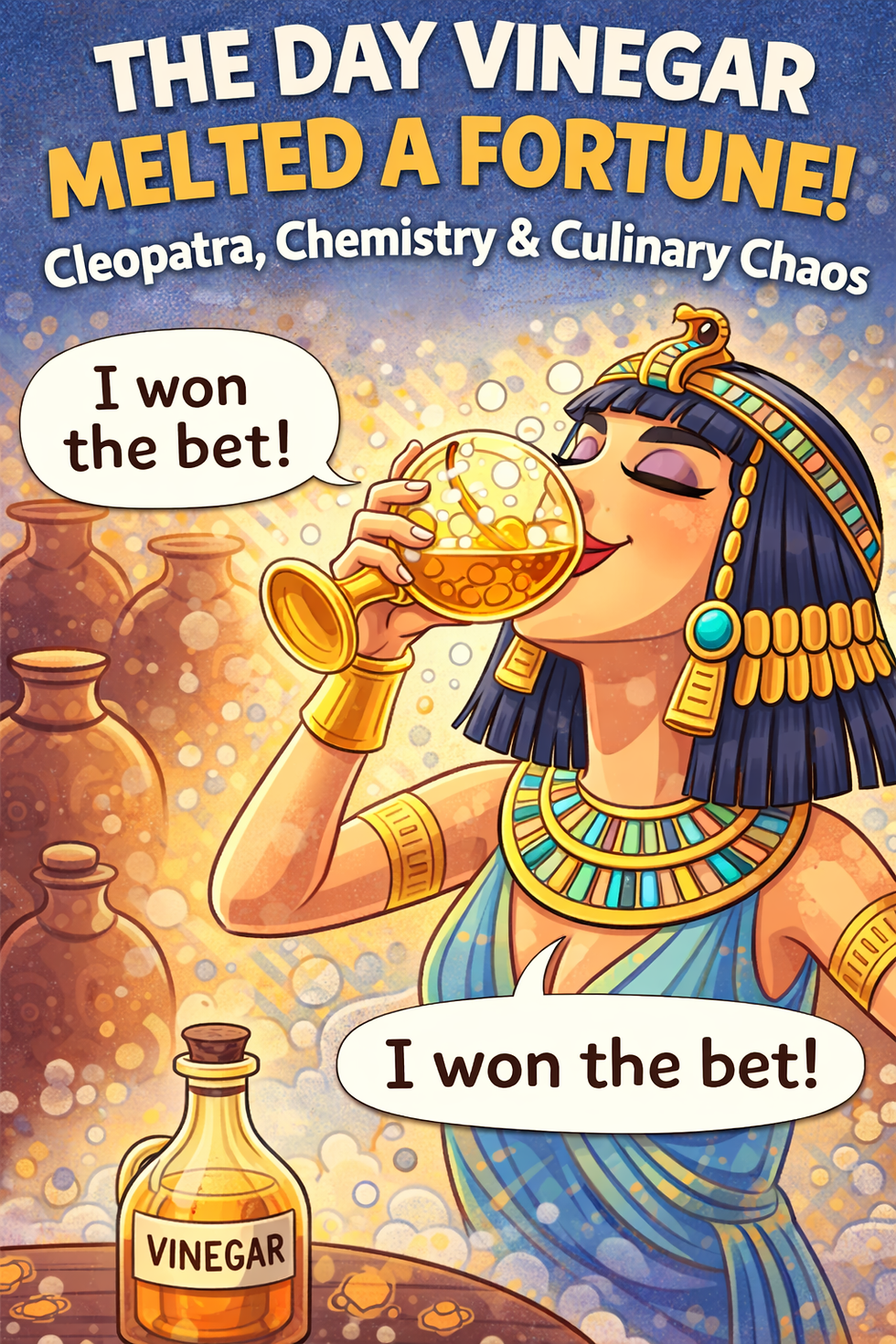
Dropped it into a goblet of strong vinegar.
The room reportedly fell silent as the pearl began to fizz and soften.
Then she lifted the glass and drank the dissolved treasure.
No second course.
No dramatic speech.
Just ancient-world mic drop energy.
Bet won.
Empire shook.
Vinegar entered the luxury chat.
Honestly?
Icon behavior.
🧪 The Science Behind the Royal Flex
Here’s the wild part:
this legendary stunt actually makes chemical sense.
Pearls are primarily composed of calcium carbonate, a mineral that reacts with acids like acetic acid (the main acid in vinegar).
When acid meets calcium carbonate:
✨ bubbles form
✨ mineral structure weakens
✨ soluble calcium salts are created
In modern kitchen language, this same principle explains why vinegar can:
help extract minerals from bone broth
tenderize tougher cuts of meat
dissolve limescale on kettles
brighten flavors in rich dishes
balance saltiness without adding sodium
So Cleopatra wasn’t just showing off wealth.
She accidentally demonstrated culinary chemistry centuries ahead of food science textbooks.
We love a queen who multitasks.
🍽️ Bringing Royal Acid Power Into Your Kitchen
You don’t need priceless jewelry to cook like royalty.
Try using live vinegar to:
🥬 brighten slow-cooked greens
🥩 soften lean proteins before cooking
🍲 add depth to soups and stews
🥗 create balance in heavy or fatty dishes
Acidity isn’t just flavor.
It’s function.
It transforms texture.
Unlocks nutrients.
Elevates complexity.
Basically — vinegar is the quiet overachiever of your pantry.
🧹 A Modern Tickled Pickler Tip
For household cleaning, vinegar has long been used to dissolve mineral deposits and neutralize stubborn odors.
But here’s our craft twist:
👉 Substitute about 20% of standard cleaning vinegar with live vinegar.
Why?
✔ smoother aroma
✔ subtle fermented complexity
✔ less harsh “chemical kitchen meltdown” smell
Because if you’re going to clean…
you might as well do it with a little artisanal flair 😏
🌍 From Ancient Drama to Modern Fermentation
Across civilizations, vinegar has been:
medicine
preservative
flavor enhancer
cleaning agent
fermentation catalyst
Folklore often exaggerated the benefits — but the underlying chemistry remains real.
Today, the revival of live fermented vinegars reconnects us with traditions rooted in patience, microbial craftsmanship, and culinary intelligence.
Cleopatra may have been proving a point.
But she also unknowingly illustrated one of food science’s greatest truths:
👉 Acidity changes everything.
🥒 A Little Product Love
At The Tickled Pickler, our live vinegars are slow-crafted through active fermentation cultures — creating layered organic acid profiles that:
✨ brighten flavor
✨ support culinary performance
✨ add depth without additives
Because transforming bland into grand
isn’t just our tagline…
it’s our daily mission.
And if that occasionally involves channeling ancient royal drama?
We’re perfectly comfortable with that.
📚 Sources:
Historical folklore reference:
James Direct Inc. (2005). Vinegar Remedy & Folklore Handbook.
Acetic acid chemistry overview
Calcium carbonate acid reaction
Acid effects in culinary science
Food safety and pH fundamentals
Authored with assistance from chatgpt


Comments