


Orange Crush Fire Cider: The Tonic, The Trademark War, and the Truth About Your Burning Throat

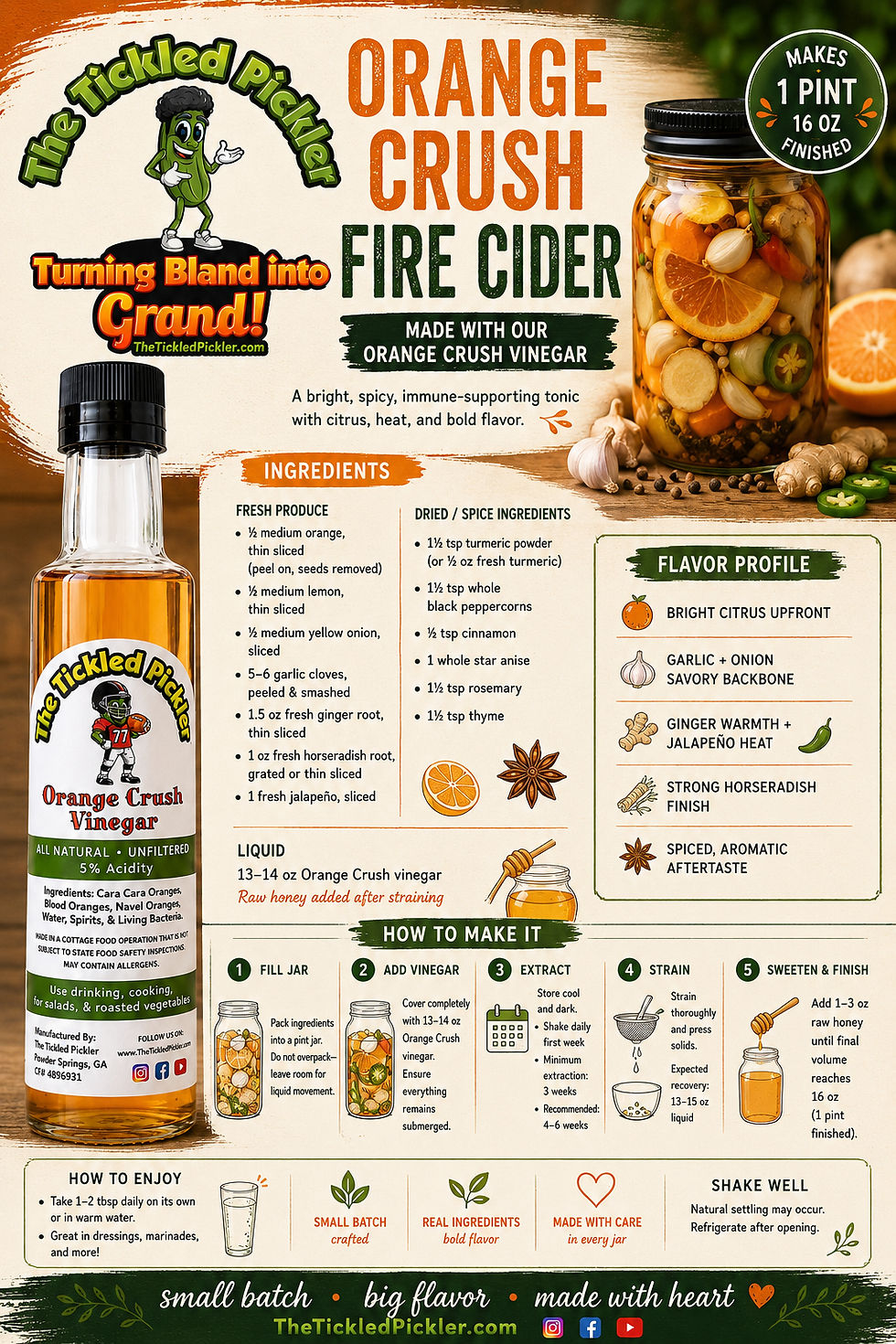
A spicy, citrusy, slightly chaotic deep-dive into the folk remedy that got dragged into federal court — and how our Orange Crush vinegar fits into the story.
Let’s get something out of the way immediately: “fire cider” is a name, not a trademark, not a brand, and definitely not a dare. It is, however, one of the most dramatic stories in modern herbalism — complete with a lawsuit, a boycott, and a federal judge ruling on the legal status of a jar of spicy vinegar. We were not going to let that history sit there unused. So we built our Orange Crush Fire Cider, and we’re telling you the whole saga while we’re at it.
So… What Even Is Fire Cider?
At its core, fire cider is an infused vinegar: a base vinegar steeped for weeks with a lineup of pungent, warming ingredients — think horseradish, garlic, ginger, onion, citrus, and hot peppers — then strained and usually sweetened with honey. The name itself was coined by herbalist Rosemary Gladstar in the late 1970s, when she put together the recipe as part of a winter wellness class at the California School of Herbal Studies. Gladstar didn’t claim to invent the underlying idea — herbalists had been steeping spicy roots in vinegar for generations — but the catchy name and her generosity in sharing the recipe are why “fire cider” became a household term in herbal circles.
Live Vinegar Tie-In: We took that same spirit — steep real ingredients in real vinegar, let time do the work — and ran it through our co-fermented, living vinegar instead of plain store-bought ACV. Orange Crush starts as its own slow-fermented vinegar, then becomes the base for this infusion. Two fermentation stories in one bottle.
The Great Fire Cider Trademark War (Yes, Really)
Plot Twist: In 2012, a company called Shire City Herbals trademarked the term “fire cider” — a name that herbalists across the country had been using for decades to describe their own versions of this traditional recipe. By 2014, the company was sending cease-and-desist letters to small herbal businesses, demanding they stop using the name on their own products.
Three herbalists — Kathi Langelier of Herbal Revolution, Mary Blue of Farmacy Herbs, and Nicole Telkes of the Wildflower School of Botanical Medicine — became the named defendants in a $100,000 lawsuit. Rather than fold, they (alongside Gladstar) organized a public campaign, founded advocacy groups called Tradition Not Trademark and Free Fire Cider, and argued that a centuries-old folk remedy belonged to the herbal community, not a single company.
The Verdict: In October 2019, a U.S. District Court judge in Massachusetts ruled — after a full trial — that “fire cider” is a generic term and cannot be trademarked. The herbalists, nicknamed “the Fire Cider Three,” won. The ruling is now considered a landmark case for protecting traditional herbal names from corporate trademarking.
So when we say “fire cider,” we’re not borrowing someone’s brand. We’re using a name that a federal court specifically confirmed belongs to everyone — herbalists, home cooks, and small fermentation-obsessed businesses in Powder Springs, Georgia, alike.
What’s Actually In Our Orange Crush Fire Cider
Our version starts with Orange Crush — our co-fermented citrus vinegar — and builds on it with a fairly chaotic-but-purposeful ingredient lineup: orange and lemon slices, onion, garlic, fresh ginger, fresh horseradish, jalapeño, turmeric, black pepper, cinnamon, star anise, rosemary, and thyme, with optional lemongrass for a brighter top note. The whole jar steeps for three to six weeks, gets pressed and strained, and finishes with raw honey.
That’s a lot of pungent ingredients in one jar, and several of them have long traditional-use histories worth talking about — carefully.
A Quick Word On “Wellness”: We’re a vinegar company, not a pharmacy. None of the ingredients below are presented as cures, treatments, or medical advice. We’re sharing traditional and educational context — the kind of thing herbalists have written about for centuries — not making promises about what will happen in your body. If you have a health condition or take medication, talk to your healthcare provider before adding a spicy fermented tonic to your routine.
Turmeric: The Yellow Stuff That Stains Everything
Turmeric’s main active compound is curcumin, which is responsible for both its vivid color and most of its reputation. According to the National Center for Complementary and Integrative Health (part of the NIH), turmeric has historically been used in Chinese, Indian (Ayurvedic), Islamic, and Thai traditional medicine systems for things like indigestion, the common cold, and minor inflammation — traditional uses, not proven treatments. We add it to Orange Crush Fire Cider for that traditional warming role and, frankly, because it turns the whole jar a glorious sunset orange.
Garlic: Ancient, Pungent, Slightly Offensive To Vampires
Garlic has one of the longest documented histories of any ingredient on this list. NCCIH notes that garlic has a long history of use both as food and for health purposes, with ancient writings from Egypt, Greece, and India describing it for conditions ranging from headaches to gastrointestinal issues. We’re not claiming our jar will do any of that — we’re just pointing out that humans have been throwing garlic into vinegar for a very, very long time, and we’re simply continuing a tradition that predates refrigeration.
Jalapeño: The Reason You’ll Feel This One
The heat in jalapeño comes from capsaicin, a compound that’s been studied and used in traditional remedies since at least the mid-1800s, when it was first noted for its “treat like with like” warming, counter-irritant properties (per NIH’s StatPearls reference library). In our jar, capsaicin’s job is simpler: it’s the reason this tonic wakes you up. Consider it the ingredient most likely to make you say a word you wouldn’t say in front of your grandmother.
Honest Disclosure: Like all our products, Orange Crush Fire Cider is made in a residential kitchen and may contain allergens including sesame and walnuts due to shared kitchen space. It’s naturally vegan and made with kosher-compliant ingredients — though it is not a certified kosher product, since we’re not a certified facility. Always check the label for the specific batch.
How To Use It (Besides Staring At It Suspiciously)
• Daily shot: 1–2 tablespoons, straight up or in a splash of water. Bold move. We respect it.
• Sparkling tonic: Mix into sparkling water with extra honey for a Southern-style drinking vinegar.
• Salad dressing booster: Whisk a tablespoon into your usual vinaigrette for a citrus-and-heat kick.
• Marinade: The acid, citrus, and aromatics do real work tenderizing and flavoring chicken or pork.
• Pan sauce finisher: A small splash off-heat at the end brightens roasted vegetables or pan-seared anything.
The Bottom Line
Fire cider isn’t a trend, a trademark, or a miracle — it’s a folk tradition that a court of law specifically protected for everyone to keep making. Our Orange Crush Fire Cider is our take on that tradition: built on our own co-fermented, living vinegar, packed with ingredients that have been showing up in jars like this for generations, and finished with honey because some traditions deserve to taste good too.
Come find us at the market, ask us about the lawsuit, and take a small sip. We’ll be standing right there, ready with napkins.
For this and other recipes visit - https://www.thetickledpickler.com/recipes
Turning Bland into Grand — one slightly terrifying tonic at a time.
Sources & References (Copy/Paste Links)
1. Mountain Rose Herbs Blog — “Fire Cider Goes to Court: Fighting for Folk Herbalism” (origin story by Rosemary Gladstar)
2. The Boston Globe — “Herbalists defended their brew in court. They won.” (2019 ruling coverage)
3. PenBay Pilot — “Union herbalist wins long-awaited trademark suit in preserving the generic term ‘Fire Cider’”
4. Southern Exposure Seed Exchange Blog — “Fire Cider: An Herbal Tradition” (Shire City Herbals trademark background)
5. National Center for Complementary and Integrative Health (NIH) — “Turmeric: Usefulness and Safety”
6. National Center for Complementary and Integrative Health (NIH) — “Garlic: Usefulness and Safety”
7. NCBI StatPearls (NIH) — “Capsaicin” (history and traditional counter-irritant use)
8. Authored with the assistance of Claude


Comments